Disclosure: Fiverr is a FreelanceMile partner, and that partnership affects where it appears in this guide. Some links are affiliate links, so I may earn a commission at no extra cost to you. The pros, cons and fees for every platform, including Fiverr, are my honest take.
You can start freelancing with no experience. You need one clear service, a few sample projects, and a plan to land the first paid job.
Upwork’s Future Workforce Index 2026 found that 38% of US skilled knowledge workers freelance, up from 28% a year earlier. That does not mean every niche is easy for beginners.
This guide shows you how to pick a beginner-friendly niche, build proof without past clients, and use platforms without relying on fake stats.
Key takeaways
- One service beats many skills. Pick one offer you can deliver well, then expand later.
- Samples count as proof. Two or three real-looking projects beat a blank portfolio.
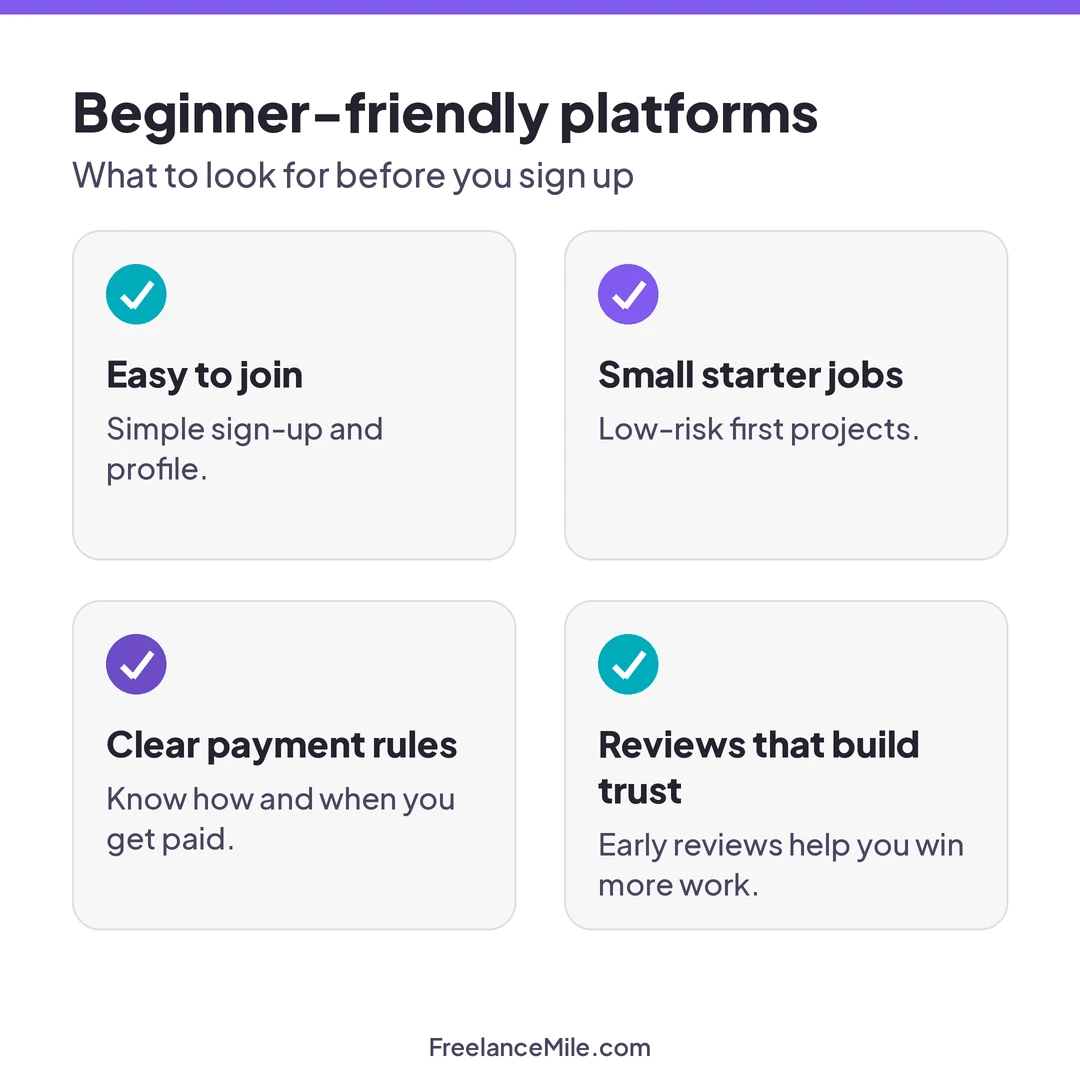
- Beginner platforms help. Fixed-price gigs and clear reviews make first jobs easier to win.
- Fees are real. Check official fee pages before you bid. Numbers below were checked 19 Oct 2026.
- Ratings matter. When I hire, ratings, recent reviews and past work drive most of the decision.
Can you start freelancing with no experience?
Yes. Clients care whether you can solve their problem, not whether you already have a long freelance resume.
If you are new to the idea itself, start with our what is freelancing hub, then come back here for the first-client steps.
What “no experience” usually means
It usually means no paid freelance clients yet. You may still have job skills, school projects, hobbies or volunteer work you can turn into samples.
What the data actually says
Skip viral head counts you cannot verify. Prefer sources with a year and a method.
Upwork’s July 2026 press release reports 38% of US skilled knowledge workers freelance (survey of 2,400 skilled workers, March–April 2026). Upwork sells freelance services, so treat that as one view.
For country context, see which countries have the most freelancers.
Pick one skill clients will pay for
A long skill list makes you hard to hire. Clients buy one clear outcome.
Beginner niches that hire new freelancers
Scroll sideways to see the full table.
| Niche | Why it works for beginners | Watch-outs |
|---|---|---|
| Writing / blog posts | You can show samples fast | Rates start low; niche topics pay better |
| Virtual assistance | Inbox, calendar and research skills transfer | Scope creep is common; write clear limits |
| Social media content | Small fixed packages are easy to sell | Clients expect consistent posting |
| Simple graphic design | Canva-level work still sells for small businesses | Brand work needs stronger samples |
| Data entry / basic admin | Low barrier to start | Pay is often low; treat as a short bridge, not a career |
How to choose your first offer
Pick one buyer type and one deliverable. Example: “weekly LinkedIn posts for coaches” beats “social media and writing and design”.
On Reddit, u/Altruistic_Type_4615 put it plainly in r/freelancing: pick one skill for the next six months, because nobody hires “seven skills at once”. (Full thread fetch timed out 19 Oct 2026; quote comes from public search snippets.)
Build a portfolio without past clients
You do not need paid work to show proof. You need clear samples aimed at the buyer you want.
Make 2–3 sample projects
Build samples that look like real jobs: a sample blog post for a local business type, a redesigned short social post set, or a simple process checklist for a VA offer.
u/katifybykat on r/smallbusinessesowners argued that your first client buys confidence you can solve their specific problem, not a 10-company resume. Make small examples around one narrow problem, then start outreach. (Thread fetch timed out; credited via public search.)
Turn samples into short case notes
For each sample, write: who it is for, the problem, what you delivered, and the result you aimed for. That reads better than screenshots alone.
Set up profiles on beginner-friendly platforms
You do not need every site. Start with one or two, finish your profile, then apply daily.
For a full ranked list, see the best freelance websites guide.
1. Fiverr
Fiverr is listed first because it is a FreelanceMile partner and because fixed-price Gigs help beginners sell a clear package.
Official seller take-home is 80% of the client’s cleared payment (a 20% platform commission), per Fiverr Help (checked 19 Oct 2026). Joining is free; check current pricing on the official pages before you set Gig prices.
Pros: Package pricing, buyer reviews, and small starter Gigs.
Cons: Competition is high in popular categories; the 20% fee means you should price for take-home pay.
2. Upwork
Upwork works more like a job board: you send proposals to posted jobs.
The freelancer service fee is variable, from 0% to 15% per contract, shown before you submit a proposal or accept an offer, per Upwork Help (checked 19 Oct 2026).
I have used Upwork on the hiring and recruiting side. Screening is real, and Connects and proposal quality matter for new freelancers.
Pros: Strong escrow tools and a large job feed.
Cons: Fees and Connects costs add up; new profiles can struggle until they have reviews.
3. Freelancer.com
Freelancer.com is a bidding marketplace. Freelancer project fees are 10% or $5 USD, whichever is greater, on fixed-price awards (10% on hourly payments), per the official Fees and Charges page (checked 19 Oct 2026).
Pros: Lots of project volume and contests.
Cons: Bidding can be noisy; free members get limited bids, and a minimum account balance may apply before you bid.
4. Toptal Marketplace (not for absolute beginners)
Toptal Marketplace is screened. In my experience, you get matcher intros after screening, and it does not take a cut of the freelancer-set rate the way an open bid board does. It is a poor first stop if you have no track record yet.
Scroll sideways to see the full table.
| Platform | Best for beginners? | Freelancer fee (checked 19 Oct 2026) | Official source |
|---|---|---|---|
| Fiverr | Yes — fixed Gigs | Seller receives 80% (20% commission) | Fiverr Help |
| Upwork | Yes — with strong proposals | 0%–15% service fee per contract | Upwork Help |
| Freelancer.com | Mixed — bidding is competitive | 10% or $5 (whichever greater) on fixed; 10% hourly | Fees and Charges |
| Toptal Marketplace | No for day-one beginners | Screened; check current terms | Toptal |
Fee pages change. If a link fails, use “check current pricing” on the official site before you bid.
How to land your first freelance client
Start with people who already know you
Message past coworkers, classmates and local business owners. Ask for a small paid pilot, not a free endless favor.
Use platforms with a tight pitch
On Fiverr, make one Gig with a clear package, delivery time and revision limit. On Upwork, send fewer, better proposals that restate the client’s problem in your first lines.
Price to win the first review
Your first jobs buy proof. Price to get a yes, deliver on time, then ask for a written review and a referral.
If you want roles that skip live interviews, see no interview remote jobs.
What clients actually look for
When I hire freelancers, ratings, recent reviews and past work drive about 80% of the decision. Price matters, but trust signals matter more for a stranger.
Signals that help a new profile
- A specific offer (who + what + outcome)
- Two or three relevant samples
- Fast, clear replies
- A small fixed scope for the first job
Common mistakes when you have no experience
- Listing every skill. Narrow the offer until someone can say yes in one sentence.
- Waiting for a perfect portfolio. Ship samples, then improve them with real feedback.
- Ignoring fees. Price for take-home pay after the platform cut.
- Chasing unverifiable stats. If a number has no official source, drop it.
- Working without milestones. Use platform payment protection when you can.
FAQ
How do I start freelancing with no experience?
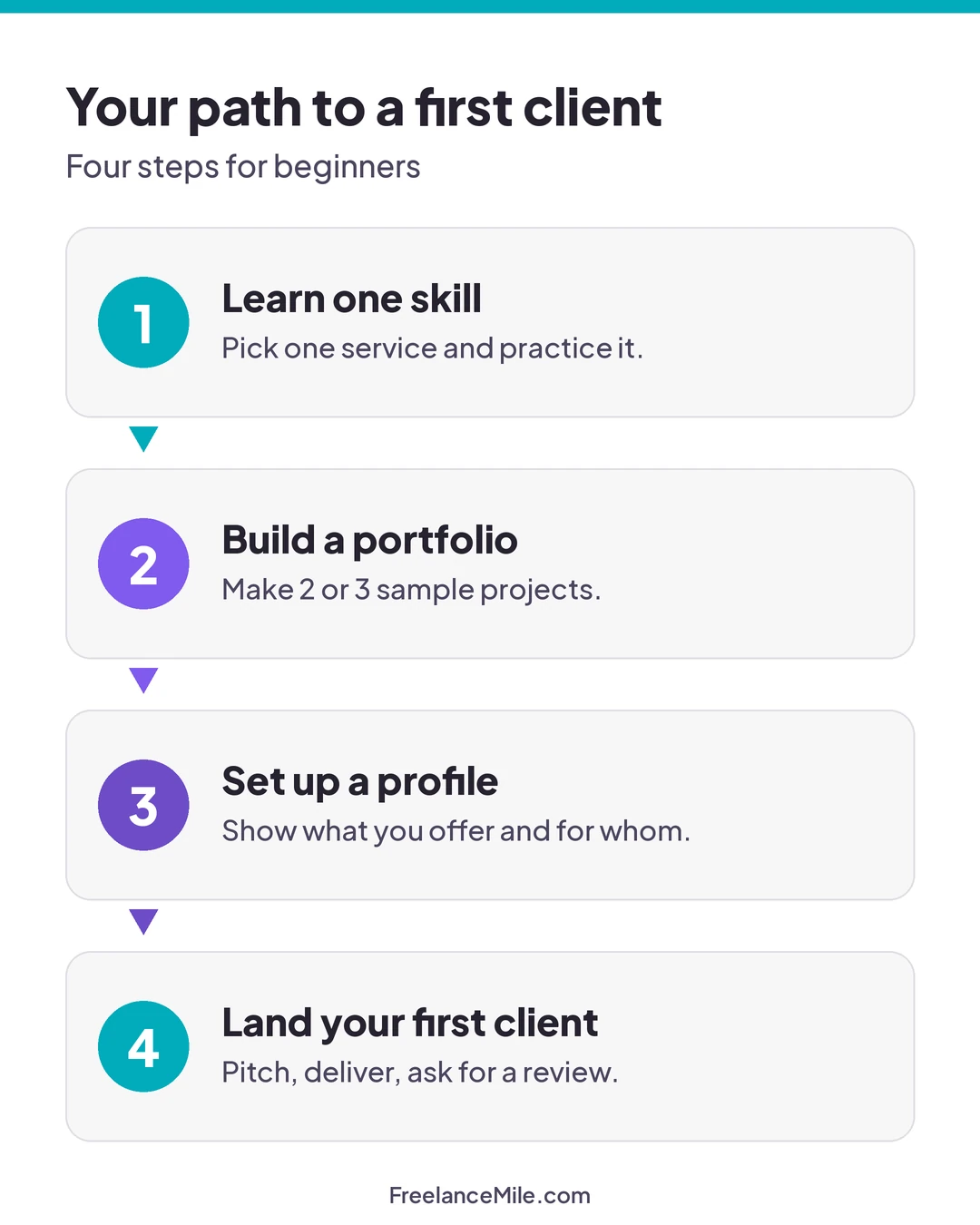
Pick one service, build two or three samples, set up one platform profile, then pitch small paid pilots until you have a review.
Do I need a website before my first client?
No. A complete platform profile plus a simple PDF or Google Drive portfolio is enough to start. Add a site once you have steady work.
Which freelance website is best for beginners?
For many beginners, Fiverr’s Gig format is the easiest first step. Upwork is strong if you write good proposals. Compare fees on the official pages and in our best freelance websites guide.
How much should I charge for my first freelance job?
Charge enough to cover platform fees and your time, but low enough to win the first review. Raise prices after two or three completed jobs with feedback.
Is data entry a good first freelance niche?
It can get you started, but pay is often low and work can dry up. Use it as a bridge while you build a higher-value skill like writing, VA work or design.
Sources (checked 19 October 2026)
- Upwork Future Workforce Index 2026 press release — 38% of US skilled knowledge workers freelance
- Upwork Freelancer Service Fee help article — 0%–15% per contract
- How Fiverr works for freelancers — sellers receive 80%
- Freelancer.com Fees and Charges — 10% or $5 (whichever greater)
- Credited Reddit comments linked in-body (full page fetches timed out 19 Oct 2026; listed in Sunday notes)
What to do next
Choose one niche today. Build one sample this week. Publish one Gig or send five tailored proposals. Then ask for a review on the first delivery.
Next reads: what is freelancing, best freelance websites, and no interview remote jobs.