
The best paying jobs in capital goods are engineering, management and technical sales roles, with U.S. median pay from $64,100 to $171,270 a year according to the Bureau of Labor Statistics.
This guide ranks eight roles by May 2025 median pay and shows growth, education and how to get started.
Key takeaways
- Engineering managers lead on pay. BLS lists a May 2025 median of $171,270, with 6% growth from 2025 to 2035.
- Machinery mechanics grow fastest. BLS projects 14% growth and the role typically needs a high school diploma.
- Sales engineers earn well. BLS lists a median of $124,900 and a bachelor’s degree as typical entry.
- Management roles need experience. Engineering and plant managers typically need 5 years or more in a related job.
- Figures cover all industries. BLS does not publish pay for capital goods alone, so treat these as benchmarks.

What are capital goods?
Capital goods are the machines, equipment and tools that businesses use to make other products or deliver services.
Examples include factory machinery, construction equipment, engines, turbines, industrial robots and heavy trucks.
Jobs in the field design, build, sell, install and maintain that equipment. Every figure below is a U.S. figure, checked in November 2026.
Best paying jobs in capital goods
These roles are ordered by BLS median annual pay for May 2025. The median for all U.S. workers was $50,980.
Scroll sideways to see the full table.
| Role | Median pay (May 2025) | Growth 2025-35 | Typical entry | Jobs, 2025 |
|---|---|---|---|---|
| Architectural and engineering managers | $171,270 | 6% | Bachelor’s degree plus 5 years or more of experience | 220,900 |
| Industrial production managers | $126,060 | 3% | Bachelor’s degree plus 5 years or more of experience | 252,100 |
| Sales engineers | $124,900 | 3% | Bachelor’s degree | 51,600 |
| Sales representatives, technical and scientific products | $104,920 | 0% (all wholesale and manufacturing reps) | Usually a bachelor’s degree for technical products | 1,571,400 (all reps) |
| Mechanical engineers | $104,110 | 11% | Bachelor’s degree | 298,500 |
| Industrial engineers | $102,440 | 12% | Bachelor’s degree | 365,100 |
| Project management specialists | $102,320 | 7% | Bachelor’s degree | 1,094,300 |
| Industrial machinery mechanics and millwrights | $64,100 | 14% | High school diploma plus on-the-job training | 547,300 |
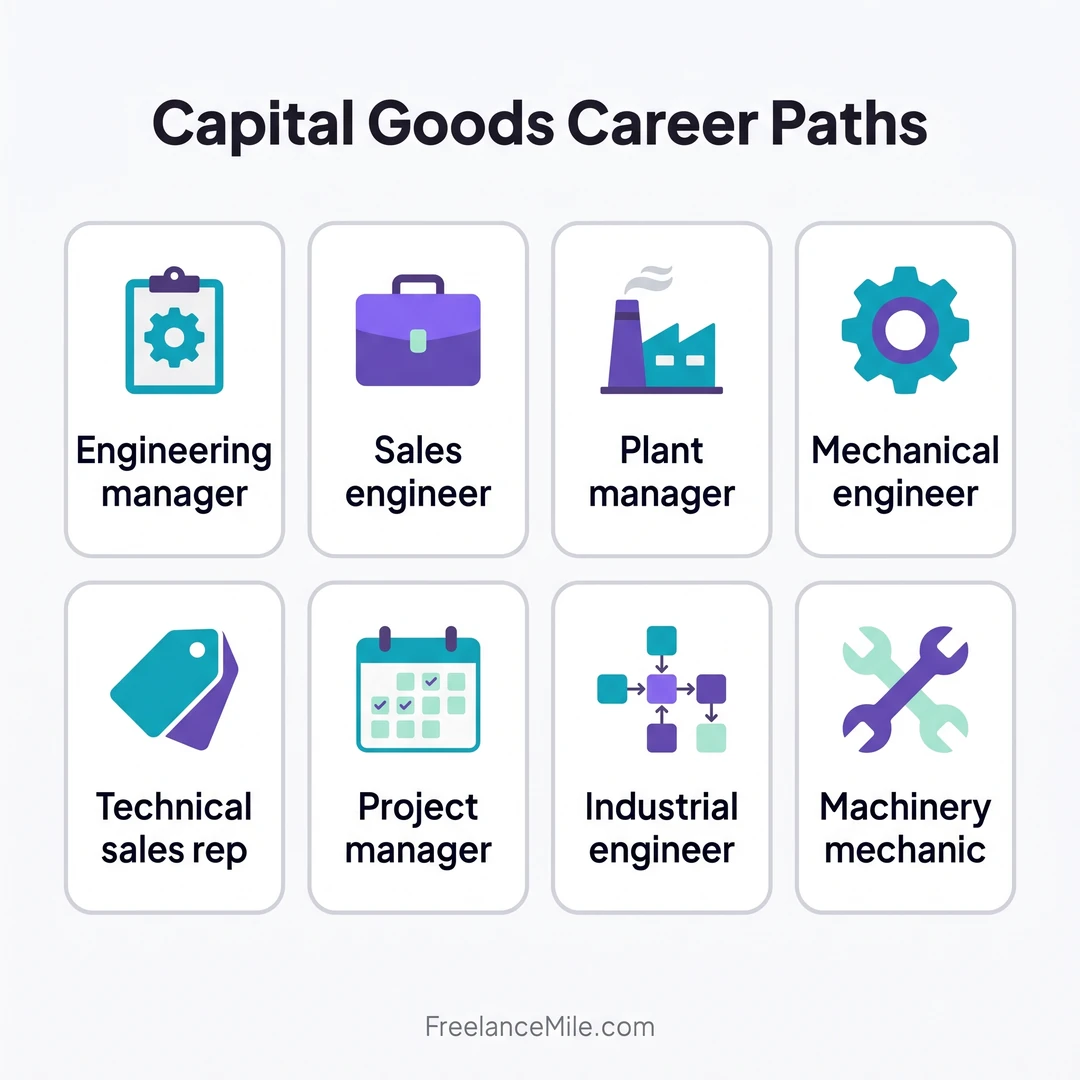
1. Architectural and engineering managers
They plan and direct engineering work, including production, quality, testing and maintenance in manufacturing.
BLS lists a May 2025 median of $171,270 and about 14,900 openings a year (BLS).
2. Industrial production managers
They run plants and production lines, managing schedules, staff, quality and costs.
Median pay was $126,060 in May 2025, and the role typically needs 5 years or more of related experience (BLS).
3. Sales engineers
They explain technical products to business buyers, tailor equipment to customer needs and support customers after the sale.
BLS lists a median of $124,900 and about 3,800 openings a year (BLS).
4. Technical and scientific sales representatives
They sell equipment such as agricultural and mechanical machinery to businesses, often for manufacturers.
The May 2025 median for technical and scientific products reps was $104,920, versus $72,080 for other reps (BLS).
5. Mechanical engineers
They design and test machines, engines and tools, from components to full production equipment.
Median pay was $104,110, and BLS projects 11% growth from 2025 to 2035 (BLS).
6. Industrial engineers
They make production systems more efficient by cutting waste in how people, machines and materials work together.
BLS lists a median of $102,440 and 12% projected growth (BLS).
7. Project management specialists
They coordinate the budget, schedule and staff for projects such as equipment installs and plant upgrades.
Median pay was $102,320, with 7% projected growth and about 76,500 openings a year (BLS).
8. Industrial machinery mechanics and millwrights
They install, maintain and repair factory equipment. Most millwrights train through apprenticeships that may last up to 4 years.
Median pay was $64,100, with 14% projected growth and about 51,900 openings a year (BLS).
Skills that raise your pay
- Technical depth. Knowing machines, controls and automation is the base for engineering and service roles.
- Sales and communication. Explaining complex equipment to buyers is what sales engineers are paid for.
- Project management. Running budgets and schedules is key for installs, upgrades and plant projects.
- Leadership. The top-paying manager roles need years of experience leading engineers or production teams.
Certifications worth a look
Project Management Professional (PMP)
PMI requires, for example, a bachelor’s degree plus 3 years of experience managing projects, and 35 hours of training.
The exam has 180 questions in 240 minutes. PMI reports a U.S. median salary of $135,000 for PMP holders.
Professional Engineer (PE) license
BLS notes that mechanical engineers who sell services directly to the public need a license (BLS). Check your state board.

How to get into capital goods
- Pick a path: engineering, sales, project management or maintenance.
- Get the right education: a bachelor’s degree for engineering and technical sales, or an apprenticeship for millwright work.
- Get hands-on experience through internships, co-op roles or entry-level plant jobs.
- Learn the equipment your target employers make or use.
- Add a certification such as PMP once you have the experience it needs.
FAQ
What is the highest paying job in capital goods?
Of the roles here, architectural and engineering managers, with a May 2025 median of $171,270 (BLS).
Is capital goods a good career path?
It can be. Many roles pay well above the $50,980 all-worker median, and machinery mechanics are projected to grow 14%.
Can I work in capital goods without a degree?
Yes. Industrial machinery mechanics and millwrights typically need a high school diploma plus training (BLS).
Are these salaries guaranteed?
No. These are medians across all industries, so half of workers earn less. Pay varies by employer, state and experience.
Conclusion
Capital goods pay is highest in engineering management, plant management and technical sales, and most of those roles need a degree.
For related careers, see best paying jobs in industrial specialties, best paying jobs in transportation and high paying jobs with no experience.