
The best paying jobs in marine transportation are ship engineers and captains, mates and pilots, with median pay above $90,000.
This guide covers 4 water transportation careers with May 2025 pay and 2025 to 2035 outlook from the Bureau of Labor Statistics, plus what it takes to get started.
Key takeaways
- Ship engineers earn the most. BLS lists a May 2025 median of $109,530 for ship engineers and $92,460 for captains, mates and pilots of water vessels.
- Entry-level pay is lower. Sailors and marine oilers had a median of $51,520, and motorboat operators $47,520.
- Pay varies widely. BLS says the lowest 10 percent of water transportation workers earned less than $37,810 and the highest 10 percent earned more than $145,560.
- Credentials matter. Most jobs need a TWIC card and a Merchant Mariner Credential, and higher jobs need years of sea time.
- The life is demanding. BLS says crews may spend weeks or months away from home.
What are water transportation jobs?
BLS says water transportation workers operate and maintain vessels that take cargo and people over water.
They work on cargo ships, tankers, tugboats, supply ships, cruise ships, tour boats and ferries.
BLS counted about 85,900 jobs in 2025, and the overall median wage was $71,860 (BLS).
4 best paying marine transportation jobs
Pay figures are U.S. median annual wages for May 2025, from BLS.
1. Ship engineer
Ship engineers operate and maintain a vessel’s propulsion system, including the engine, boilers, generators and pumps (BLS). The median wage was $109,530.
BLS says large vessels usually have a chief engineer and first, second and third assistant engineers. About 8,800 people held these jobs in 2025.
2. Captain, mate or pilot
Captains have overall command of a vessel and are responsible for its crew, cargo and passengers. Mates, or deck officers, monitor the ship’s position, speed and direction.
Pilots guide ships through confined waterways and harbors. BLS says some pilots also need a license issued by their state.
The median wage for captains, mates and pilots of water vessels was $92,460, and about 41,300 people held these jobs in 2025.
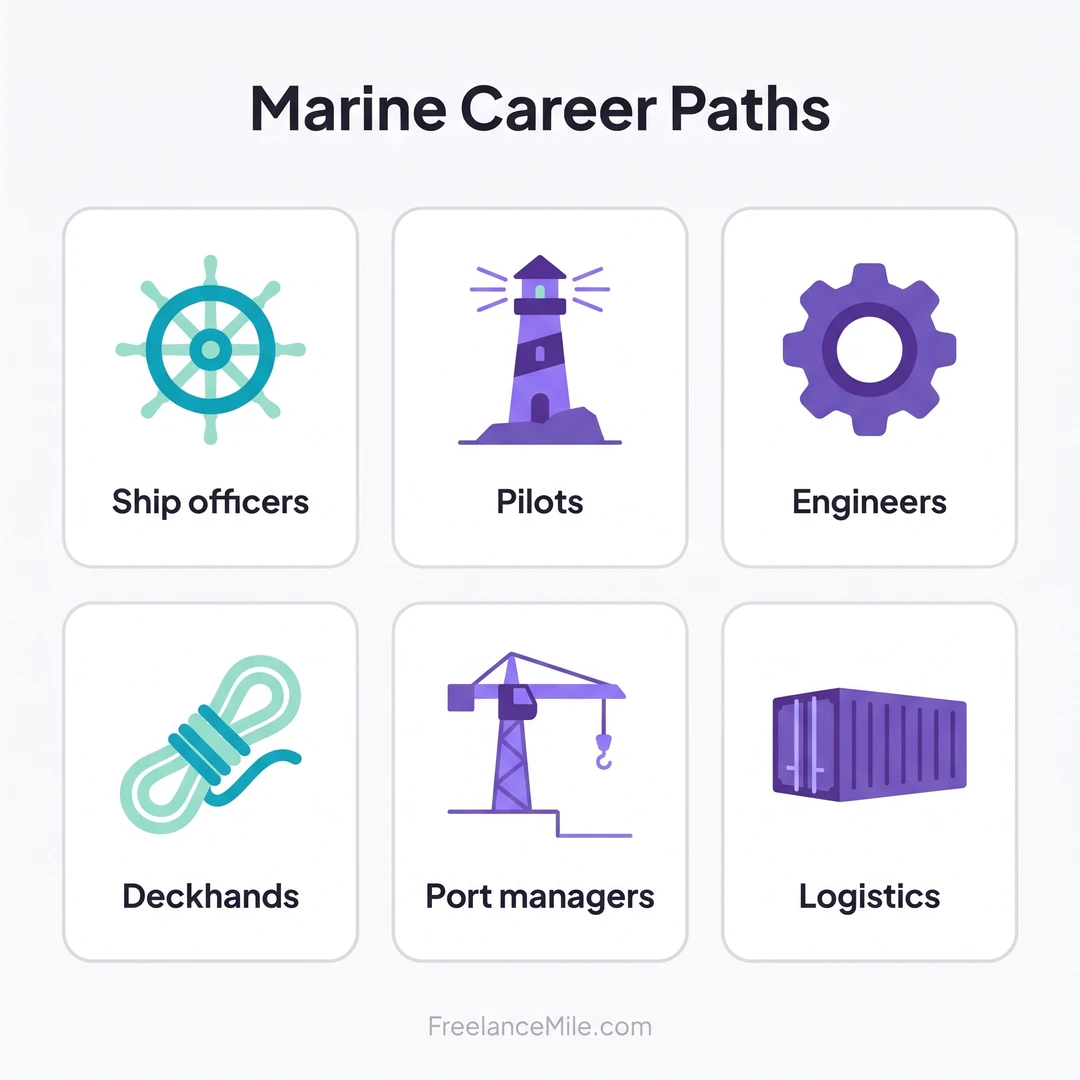
3. Sailor or marine oiler
Sailors, or deckhands, operate and maintain the vessel and deck equipment, stand watch and handle upkeep. Marine oilers help engineers in the engine room.
BLS says there are no educational requirements for entry-level sailors and marine oilers, and they typically receive training on the job. The median wage was $51,520, and about 33,000 people held these jobs.
4. Motorboat operator
Motorboat operators run small, motor-driven boats that carry only a few passengers, such as fishing charters, tours and harbor patrols.
The median wage was $47,520, and about 2,800 people held these jobs in 2025.
Pay comparison
Scroll sideways to see the full table.
| Job | Median pay (May 2025) | Jobs in 2025 |
|---|---|---|
| Ship engineers | $109,530 | 8,800 |
| Captains, mates and pilots of water vessels | $92,460 | 41,300 |
| Sailors and marine oilers | $51,520 | 33,000 |
| Motorboat operators | $47,520 | 2,800 |
Source: BLS Occupational Outlook Handbook, Water Transportation Workers. These figures are medians for wage and salary workers, so your pay may differ.
Pay by industry
BLS also lists median wages for water transportation workers in several industries in May 2025:
- Deep sea, coastal and Great Lakes water transportation: $79,420.
- Support activities for water transportation: $77,990.
- Inland water transportation: $65,660.
- Federal government, excluding postal service: $57,930.
How to get started
BLS says there are no educational requirements for entry-level sailors and marine oilers, but other workers typically complete U.S. Coast Guard-approved training programs (BLS).
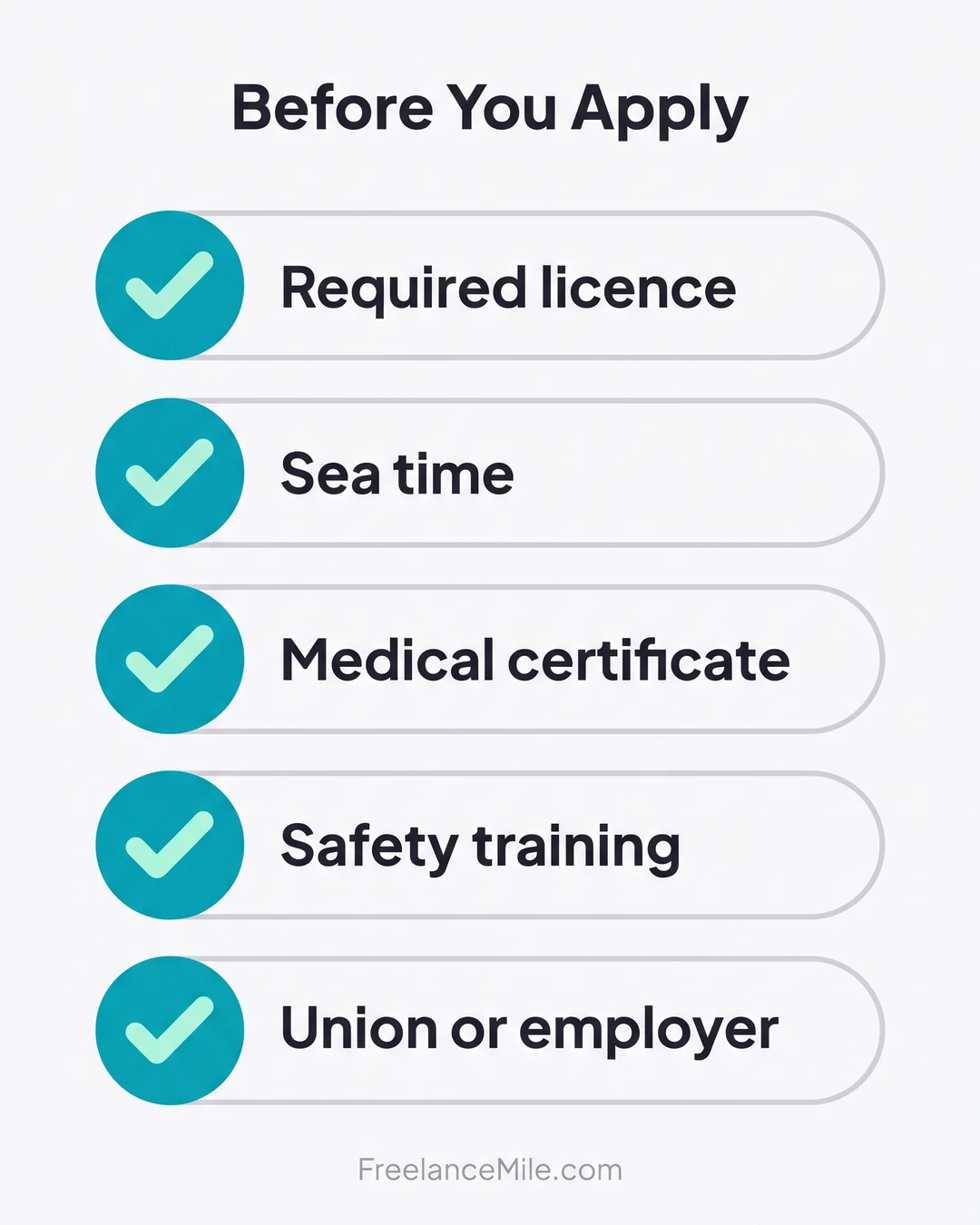
Most water transportation jobs require a Transportation Worker Identification Credential (TWIC) from the TSA and a Merchant Mariner Credential, plus related endorsements, from the Coast Guard.
Mariners who work on ships traveling on the open ocean need USCG-verified training for the Standards of Training, Certification, and Watchkeeping (STCW) endorsement.
Other items to plan for:
- Sea time. Other than sailors and marine oilers, workers typically need several years of maritime experience. For example, a marine oiler needs at least 3 years of experience to become a third engineer.
- Health tests. BLS says you must pass hearing and vision tests to get a Merchant Mariner Credential.
- Maritime academies. BLS says employers may prefer candidates with a bachelor’s degree from a maritime academy. Graduates of the U.S. Merchant Marine Academy must serve several years as an officer in a reserve unit or on active duty.
- Apprenticeships. BLS says graduates of a maritime academy gain some of the required experience in their program, as do those who complete an apprenticeship.
Work life and job outlook
BLS says most water transportation workers are full time and many work more than 40 hours a week.
Some crews, such as those on barges or deep-sea ships, may spend weeks or months away from home and work on board 7 days a week. Some work is seasonal, such as Great Lakes crews who often do not work in winter.
BLS projects 4% employment growth from 2025 to 2035, about as fast as the average, with about 8,600 openings a year.
Most of those openings come from workers who move to other occupations or leave the labor force, such as to retire.
FAQ
What is the highest paying job in marine transportation?
Among the four BLS groups, ship engineers have the highest median wage at $109,530 (May 2025). Captains, mates and pilots follow at $92,460 (BLS).
Do you need a degree to work on a ship?
Not for entry-level sailors and marine oilers, according to BLS. Other roles typically need Coast Guard-approved training, and some employers prefer a maritime academy degree.
What credentials do mariners need?
BLS says most jobs need a TWIC and a Merchant Mariner Credential with related endorsements. Ocean-going mariners also need STCW training.
Is marine transportation a good career?
It can pay well, but BLS notes long periods away from home and weather exposure. Weigh the pay against the lifestyle.
Conclusion
Marine transportation offers solid pay, especially for engineers and officers, but the best jobs take sea time and credentials. Start by checking the TWIC and Merchant Mariner Credential requirements for the role you want.
For related ideas, see best paying jobs in capital goods, travel jobs with no experience and high paying jobs with no experience.