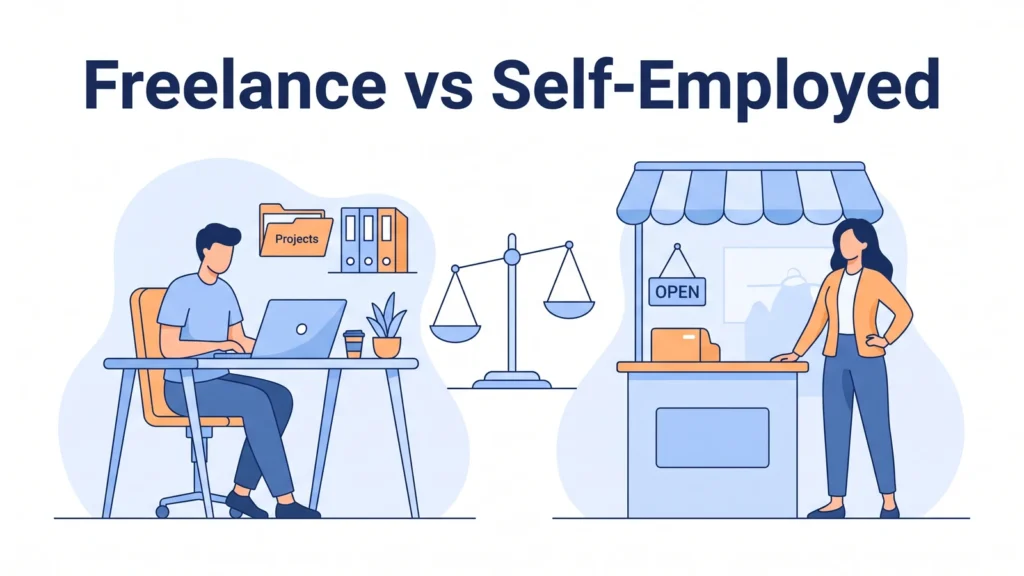
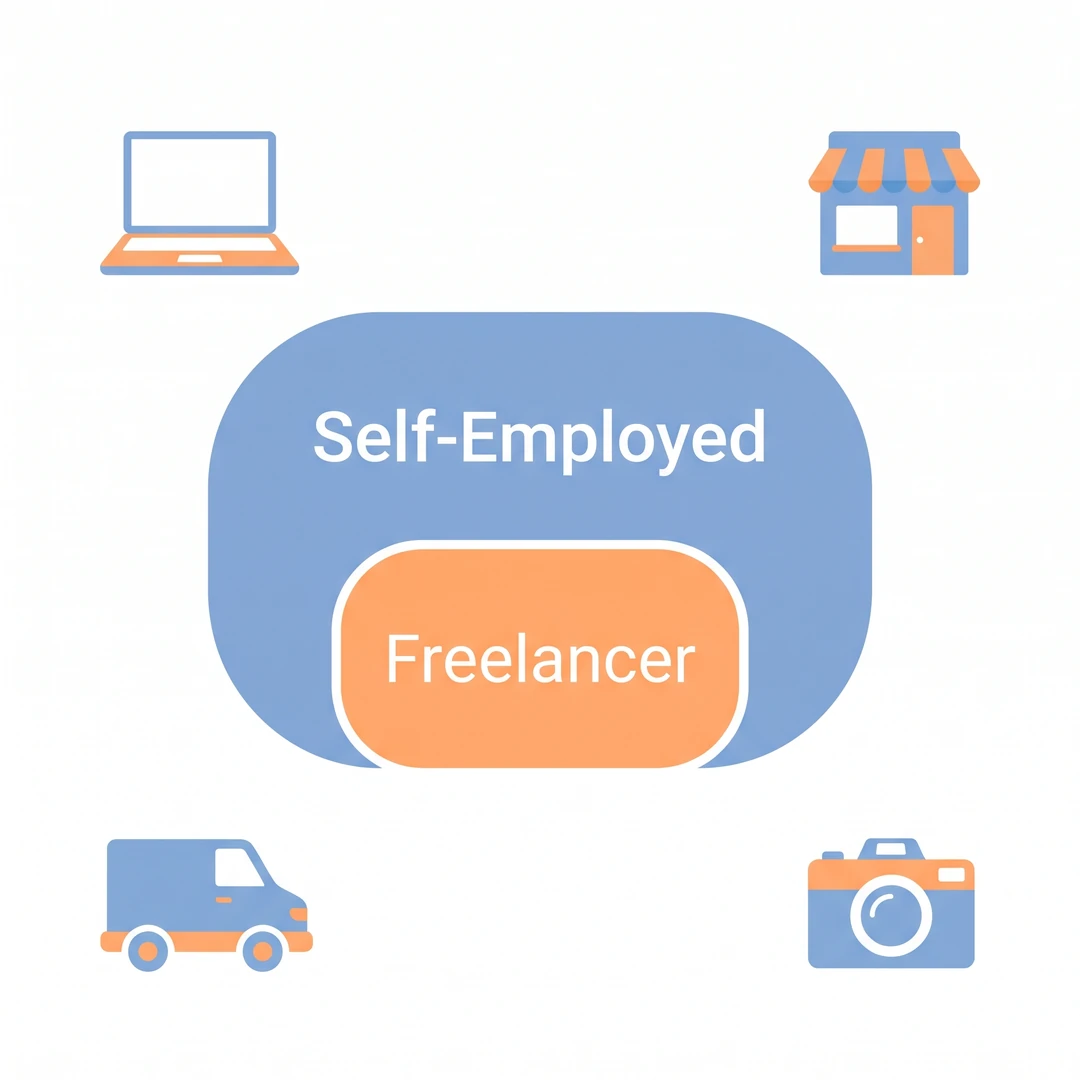
A freelancer is a type of self-employed person: someone who sells services to clients project by project. Self-employed is the wider label, and it also covers people who run shops, agencies or other small businesses.
This guide explains the difference in plain terms, what the IRS says about independent contractors and employees, how self-employment tax and estimated taxes work in the U.S., and how to choose a label for your own work.
Key takeaways
- Freelancers are self-employed. The IRS says if you are an independent contractor, then you are self-employed (IRS).
- Self-employed is the bigger group. The IRS includes sole proprietors, partners and others who are in business for themselves (IRS Topic 554).
- The tax rules are the same. Self-employment tax is 12.4% for Social Security plus 2.9% for Medicare, and it usually applies if net earnings are $400 or more (IRS).
- Control decides employee or contractor. The IRS looks at behavioral control, financial control and the type of relationship, not at the job title (IRS).
- Quarterly payments are common. Sole proprietors generally pay estimated tax if they expect to owe $1,000 or more when they file (IRS).
Freelance vs self-employed: the short answer
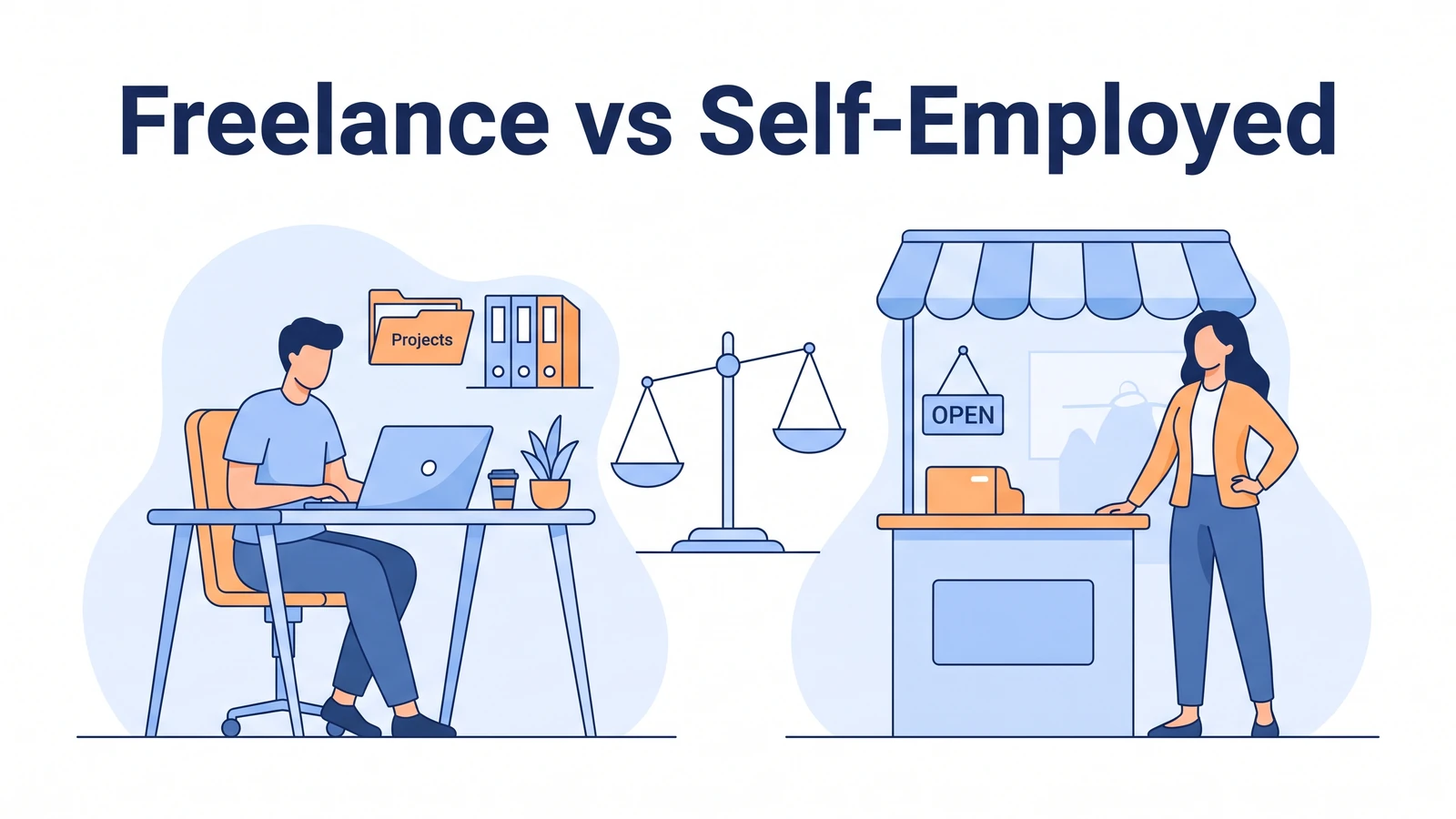
Freelancing describes how you work: you sell your skills to different clients, usually one project or contract at a time. Writers, designers, developers and video editors are typical examples.
Self-employed describes your tax and legal status: you work for yourself instead of an employer. A freelancer is self-employed, but not every self-employed person is a freelancer.
A café owner, a plumber with one van and a person who runs an online shop are all self-employed. Most would not call themselves freelancers. For a full definition of freelancing, read what is freelancing.
What the IRS says about independent contractors
The IRS says people in an independent trade, business or profession who offer services to the general public are generally independent contractors. Whether you are one or an employee depends on the facts in each case (IRS).
The general rule is that you are an independent contractor if the client has the right to control or direct only the result of the work, not what will be done and how (IRS).
This is the tax view of a freelancer. The IRS does not use the word freelancer; it uses independent contractor, sole proprietor and self-employed.
Freelance vs self-employed: side-by-side
Scroll sideways to see the full table.
| Point | Freelancer | Other self-employed business owner |
|---|---|---|
| What you sell | Your own skills, project by project | Products, services or both, often with a shop, stock or team |
| Typical clients | Several clients at once, often online | Customers, often local and repeat |
| Pay | Per project, hour or retainer | Sales minus business costs |
| Costs | Software, equipment, taxes, insurance | Same, plus rent, stock, staff or equipment |
| Tax status in the U.S. | Independent contractor, usually a sole proprietor | Sole proprietor, partner, LLC member or another structure |
| Self-employment tax | Yes, if net earnings reach $400 | Yes, if net earnings reach $400 |
The last two rows show the point most people miss. The label changes how you describe your work, but it does not change the basic tax duty.
Taxes for freelancers and self-employed people
Self-employment tax
The IRS says you are self-employed for this purpose if you are a sole proprietor, including an independent contractor, a partner or otherwise in business for yourself (IRS Topic 554).
You usually must pay self-employment tax if your net earnings are $400 or more. Generally, the amount subject to the tax is 92.35% of your net earnings.
The rate is 12.4% for Social Security and 2.9% for Medicare. The IRS says you calculate net earnings by subtracting ordinary and necessary business expenses from your business income.
Estimated tax payments
The IRS says individuals, including sole proprietors, generally have to make estimated tax payments if they expect to owe tax of $1,000 or more when their return is filed (IRS estimated taxes).
Nobody withholds tax from your client payments, so you pay during the year yourself. Check the IRS page for the current due dates.
Forms
The IRS lists Form 1040 with Schedule C for income tax, Schedule SE for self-employment tax and Form 1040-ES for estimated tax for sole proprietors (IRS sole proprietorships).
The IRS says the person who pays an independent contractor generally reports the payments on Form 1099-NEC (IRS).
Always check the current form rules and thresholds on IRS.gov, or ask a tax professional, because they can change.
Employee or independent contractor? The three tests
Before you accept a long-term “freelance” job, check whether the client is treating you like an employee. The IRS says all evidence of control and independence must be considered (IRS).
The IRS groups that evidence into three categories:
- Behavioral. Does the company control or have the right to control what you do and how you do your job?
- Financial. Does the payer control the business side of your work, such as how you are paid, whether expenses are reimbursed and who provides the tools?
- Type of relationship. Are there written contracts or employee-type benefits?
If a client controls how, when and where you work, you may be an employee, whatever the contract is called. The IRS says what matters is the legal right to control the details, even if you are given freedom of action.
Write the scope, deadlines and payment terms in a contract. See how to write a freelance contract for a simple outline.
Business structures: sole proprietor, LLC and more
The U.S. Small Business Administration says you are automatically considered a sole proprietorship if you do business activities but do not register as another kind of business (SBA).
It also says a sole proprietorship does not create a separate business entity, so you can be held personally liable for business debts.
An LLC separates personal and business assets in most cases. The SBA says LLC members are still considered self-employed and pay self-employment tax.
Rules differ by state and country, so ask a local accountant or lawyer before you choose a structure.
Which one should you call yourself?
- Say freelancer if you sell your own skills to several clients and have no staff.
- Say self-employed on forms, loan applications and tax paperwork.
- Say business owner or agency owner if you hire people, hold stock or run a shop.
Many people are all three at different times. A freelance designer who hires two contractors and starts selling templates is still self-employed, and is now building a small business.
Pros and cons
Freelancing
- You can take on different clients and projects, and you often set your own hours.
- Start-up costs can be low, because many freelancers begin with a laptop and software.
- Income can swing between months, and you must find your own clients.
Running another kind of self-employed business
- You can build something that grows beyond your own time, with staff or products.
- It can need more money up front, such as rent, stock or equipment.
- You may carry more responsibility, including staff, suppliers and insurance.
How to start
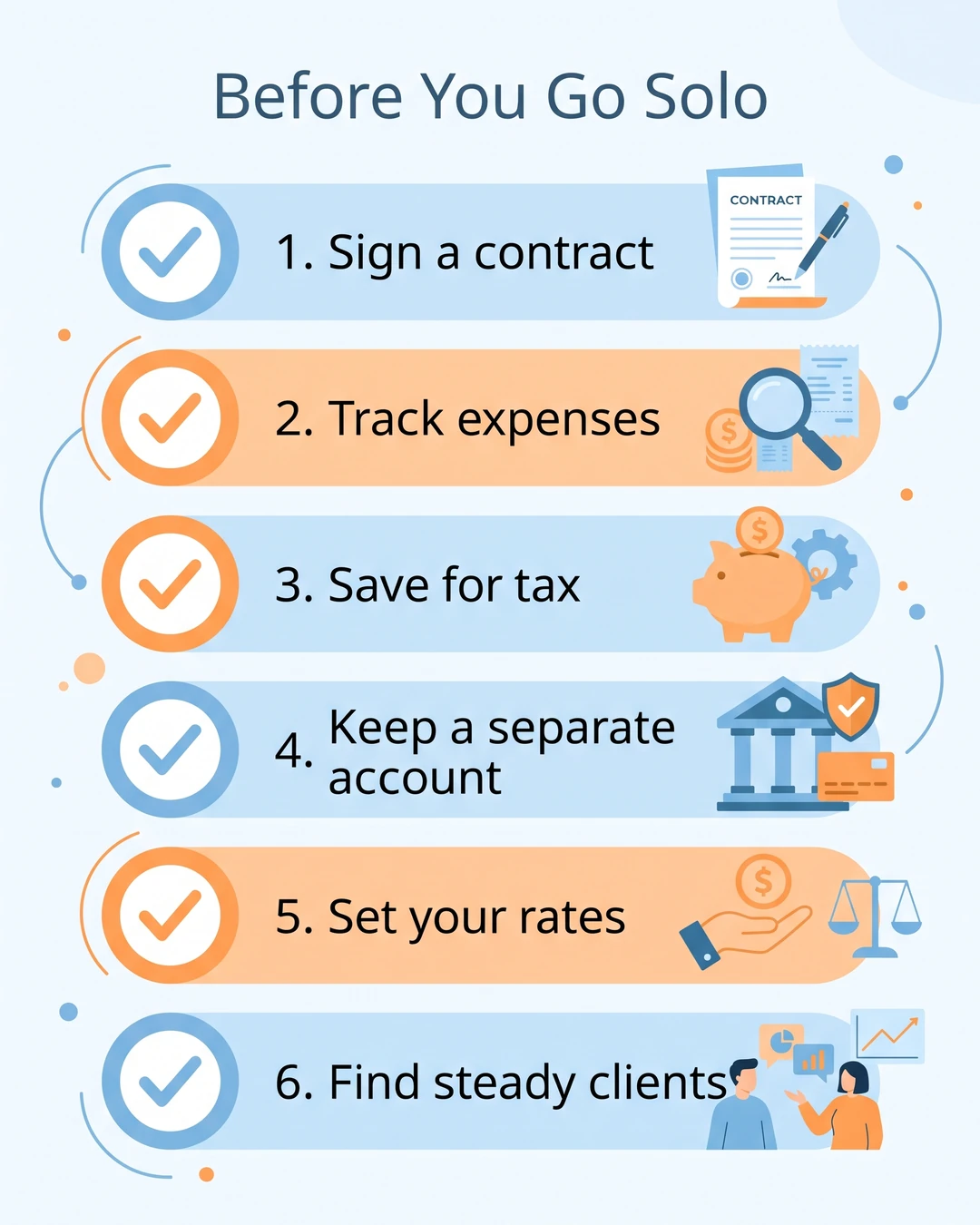
Start with one skill and one offer. Then set up your tax records and a simple contract. Read how to become self-employed for the steps.
Keep your business money in a separate account, track every expense and save part of each payment for tax.
FAQ
Is a freelancer self-employed?
Yes. The IRS says if you are an independent contractor, then you are self-employed (IRS).
Is a freelancer the same as an independent contractor?
In everyday use, usually yes. For taxes, the IRS term is independent contractor, and the IRS says earnings of independent contractors are subject to self-employment tax.
Do freelancers need a business licence?
It depends on your country, state, city and profession. Check with your local government and, if you work in a regulated trade, your licensing board.
Do freelancers and self-employed people pay the same taxes?
For federal self-employment tax in the U.S., yes. The same 12.4% and 2.9% rates apply to sole proprietors and independent contractors (IRS). Other taxes depend on your structure and location.
Can I be freelance and employed at the same time?
Yes. Many people freelance on the side of a job. Check your employment contract for rules about outside work, and keep your freelance income separate for tax.
Conclusion
A freelancer is one kind of self-employed person. Choose the label that matches how you work, then focus on the parts that matter most: a clear contract, correct taxes and steady clients.