
To become an Excel freelancer, pick a clear type of spreadsheet problem you can solve, build three sample projects, set a price that covers your time, fees and taxes, and apply for jobs where clients already ask for it.
Key takeaways
- Sell an outcome, not “Excel”. Clients pay for a clean report, a working budget model or a task that now runs on its own.
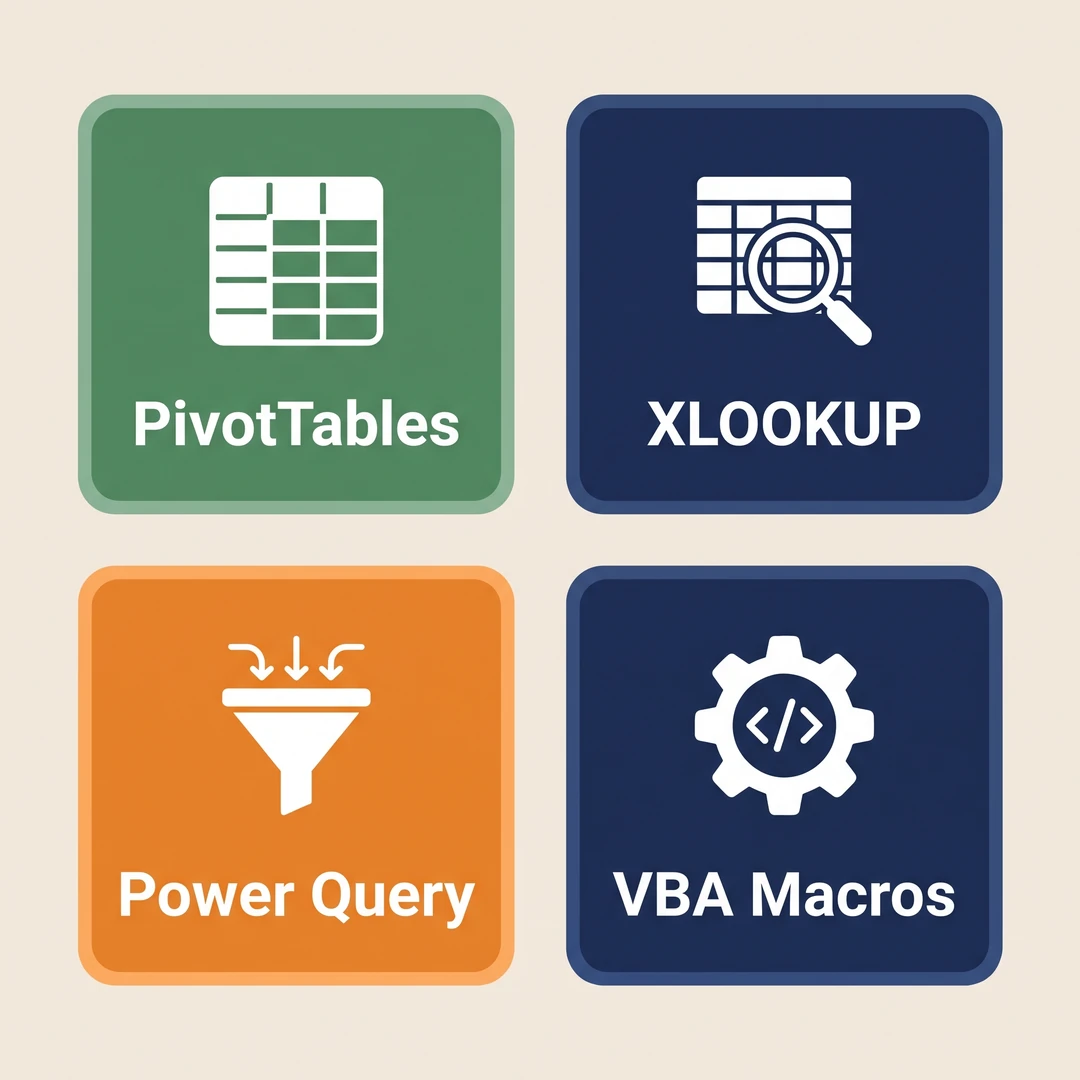
- Learn the core tools. PivotTables, lookup formulas, Power Query and, for automation, VBA cover most paid Excel work.
- Samples beat certificates. A Microsoft certification can help, but a portfolio of before-and-after files shows what you can do.
- Price after fees and tax. Upwork says its freelancer fee ranges from 0% to 15% per contract, and the IRS says self-employment tax usually applies from $400 of net earnings.
- Never share client data. Anonymize every sample file and get written permission before you show client work.
What does an Excel freelancer do?
An Excel freelancer builds, cleans, analyzes and automates spreadsheets for clients who do not have the time or skill to do it themselves.
Typical jobs include financial models, budgets and forecasts, sales or inventory reports, dashboards, data cleanup and import, templates, and macros that save hours of manual work.
Many clients also use Google Sheets. If you can work in both, you can take more jobs.
How to become an Excel freelancer: step by step
1. Choose a specific type of problem
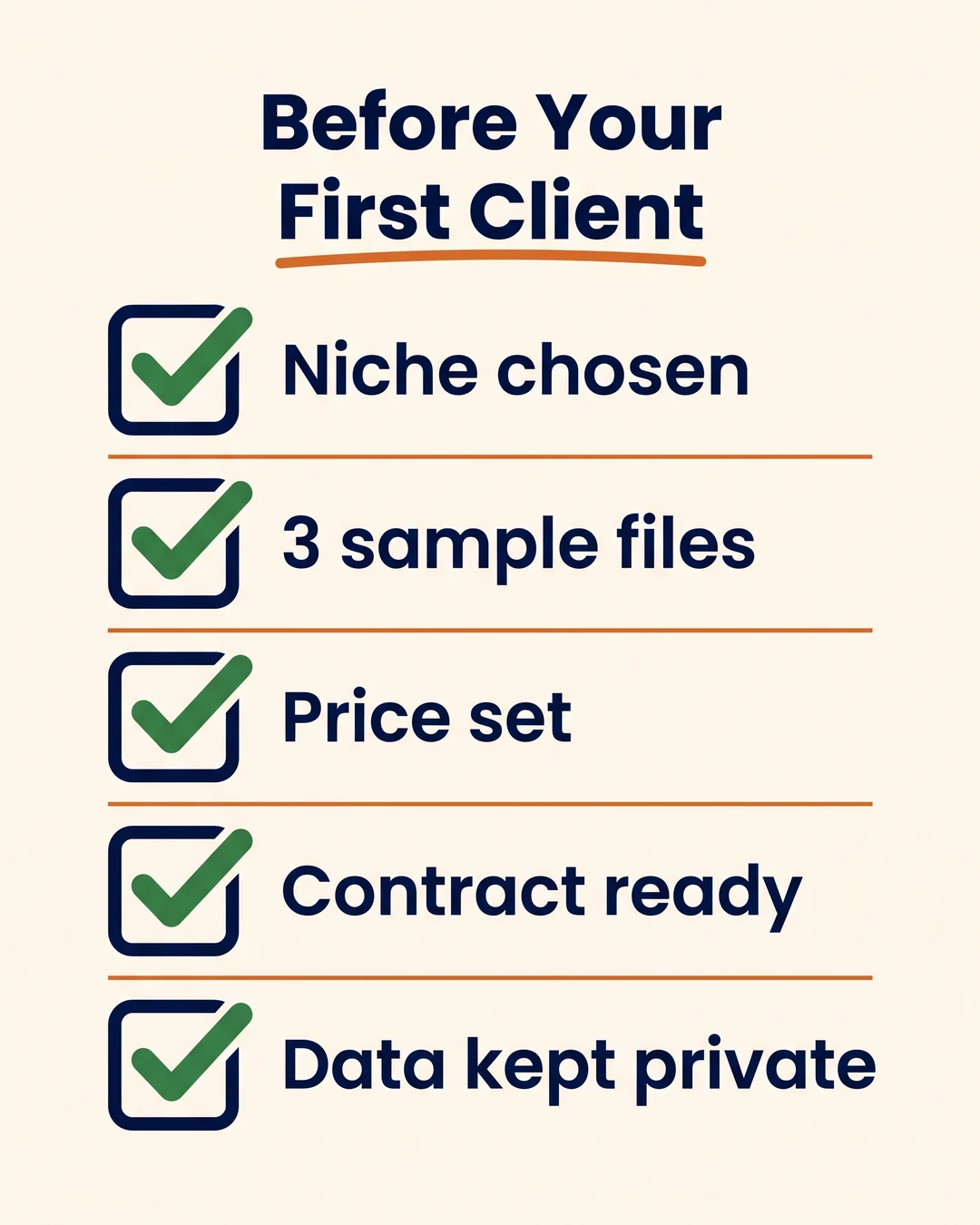
“I do Excel” is too broad to stand out. Pick one problem and one type of client, such as monthly reporting for small online shops, or budget models for small agencies.
Start with what you already know from work or study. Real examples are easier to sell than a long list of features.
2. Learn the skills clients ask for
Build depth in a few tools, rather than a little in everything. The list below shows what each tool is for and where Microsoft documents it.
Scroll sideways to see the full table.
| Skill | What clients use it for | Official reference |
|---|---|---|
| PivotTables | Summarize large data sets and compare totals by category or period | Microsoft: Create a PivotTable |
| Lookup formulas (XLOOKUP) | Match records between tables, such as prices by product code | Microsoft: XLOOKUP |
| Power Query | Import, clean and reshape data with steps you can refresh | Microsoft: What is Power Query? |
| VBA macros | Automate repeated tasks inside Excel | Microsoft: Excel VBA reference |
Check the version your client uses. Microsoft notes that XLOOKUP is not available in Excel 2016 and Excel 2019, so a workbook for those versions needs another approach.
3. Decide whether to get certified
Microsoft offers the Microsoft Office Specialist exams. The Excel Associate exam is MO-210 (Microsoft Learn) and the Excel Expert exam is MO-211 (Microsoft Learn).
Microsoft says candidates should have approximately 150 hours of instruction and hands-on experience. Each exam lasts 50 minutes and is proctored.
The MO-211 exam covers workbook options, data formatting, advanced formulas and macros, and advanced charts and tables. The price depends on your country, so check the exam page.
A certificate is optional. It can help when a client does not know you yet, but your sample work matters more.
4. Build three sample projects
Make three files that show a problem, your solution and the result. Use made-up or public data, never real client data.
- A cleaned data set with a PivotTable summary and a short note on what it shows.
- A budget or forecast model with clear inputs, formulas and a one-page summary.
- A workbook that automates one task, with a short description of the time it saves.
5. Set up your offer and price
Decide what you sell: an hourly service, a fixed price for a defined job, or a monthly retainer for regular reports.
Work out your price from the income you want, minus fees and taxes. Upwork gives this example: to take home $20 an hour with a 10% fee, charge the client $22.22 an hour (Upwork Help).
For a worked method, use the freelance hourly rate calculator. We do not quote a standard Excel rate here because no source we could verify covers it.
6. Find your first clients
Marketplaces such as Upwork let you apply to Excel and data jobs. Our guide to starting on Upwork shows how, and the list of best freelance websites compares others.
Read each job post fully. Then reply with a short note that names their problem, shows a relevant sample and states a clear next step.
Outside marketplaces, tell people you know, post sample work on LinkedIn, and offer to fix one small spreadsheet problem for a local business.
Excel jobs you can offer
- Reporting: monthly sales, marketing or finance reports that refresh from new data.
- Data cleanup: fixing duplicates, formats and mixed data from several sources.
- Models and templates: budgets, forecasts, quotes, invoices and trackers.
- Dashboards: one-page views of key numbers with charts.
- Automation: macros or Power Query steps that replace manual work.
- Data entry: accurate entry and checking. See how to learn data entry for freelancing.
Contracts, invoices and taxes
Contract
Write down the scope, deadline, price, revision limit and who owns the finished file before you start. See the freelance contract guide.
Invoices
Send a clear invoice with the work done, the amount and the payment terms. Read how to invoice as a freelancer.
Taxes (U.S.)
The IRS says an independent contractor is self-employed (IRS). You usually must pay self-employment tax if your net earnings are $400 or more (IRS Topic 554).
The rate is 12.4% for Social Security and 2.9% for Medicare. Rules differ in other countries, so check with your local tax authority.
How to handle client data safely
Spreadsheets often hold payroll, customer or financial data. Work only on what you need, and ask the client how they want files shared and stored.
Write your confidentiality terms into the contract. Delete files when the job ends if the client asks you to.
FAQ
How do I handle difficult clients as an Excel freelancer?
Agree on the scope in writing, set a limit on revisions and confirm changes by email. Keep a record of what was asked and delivered.
Do I need a certification to be an Excel freelancer?
No. Clients mostly judge your samples, references and how well you understand their problem. A certification is an optional extra.
How do I negotiate a contract as an Excel freelancer?
Know your minimum price after fees and taxes, ask what result the client needs, and offer a defined scope at a fixed price or a capped number of hours.
Why hire a freelance Excel expert?
A specialist can build a model that fits your process, turn raw data into a clear report and automate repeated tasks, so your team spends less time on manual work.
Can I freelance in Excel on the side of a job?
Many people start that way. Check your employment contract for rules on outside work, and never use your employer’s data or time.
Conclusion
Start small: one problem, three samples and a clear price. Then apply for jobs steadily, improve your offer after each project, and add skills such as Power Query or VBA as clients ask for them.