Yes, freshers can freelance. You do not need a first job on your resume if you can show samples and finish the work you promise.
This 2026 guide covers how to get early clients, what official US data says about common skills, and the tax basics new freelancers miss.
Key takeaways
- No paid job history is required for most freelance services. Clients hire for a result they can see.
- Practice work counts if it is real and specific. The BLS says design candidates should have a portfolio; the same idea helps writers and developers.
- US freelancers are usually self-employed. You generally file if net earnings are $400 or more and may owe 15.3% self-employment tax (IRS, IRS).
- Start narrow. One clear service is easier to sell than a long list of untested skills.
- Use a written contract even on the first paid project.
What “fresher” means here
In this guide, a fresher is someone with little or no paid work history: a new graduate, a career starter, or a student moving into paid projects.
Freelancing can be a first career step or a side income while you study or job-hunt. It is still self-employment, not a substitute for an employer training program.
If you have just finished school, freelancing after 12th covers age and platform rules in more detail.
Why a first job is not required
A freelance client is buying a defined piece of work, not hiring you onto a payroll. They can judge a sample, a short trial, or a small paid project without seeing years of employment.
The BLS writers page notes that many writers and authors are self-employed, and that internships or any writing that improves skill, such as blogging, is beneficial.
For web developers and digital designers, educational requirements range from a high school diploma to a bachelor’s degree. That range is one reason a strong sample can matter more than a first employer’s title.
I dropped an older claim from the previous version of this post that US freelancers earn more per hour than 70% of workers. I could not verify that figure from a current official source.
Services that are realistic for a first gig
Pick work you can already finish, then make the offer specific. “I write 800-word product explainers” is easier to buy than “I do content.”
Scroll sideways to see the full table.
| Service | Why it can work for a fresher | May 2025 median pay (whole occupation) |
|---|---|---|
| Web development and digital design | Official entry education ranges from a high school diploma to a bachelor’s degree. A live sample site is proof. | Web developers $92,650; digital interface designers $104,000 |
| Graphic design | Hired roles often expect a degree, but official guidance still puts weight on a portfolio of original work. | $62,960 a year |
| Writing | Full-time writing jobs often expect a degree, but self-employed writers can start with published or practice samples. | $76,910 a year |
Those pay figures are occupation-wide medians for May 2025, not typical first-project rates. Price a small first job so you can deliver it well, then raise your rate. See how much you should charge.
How to get your first freelance work
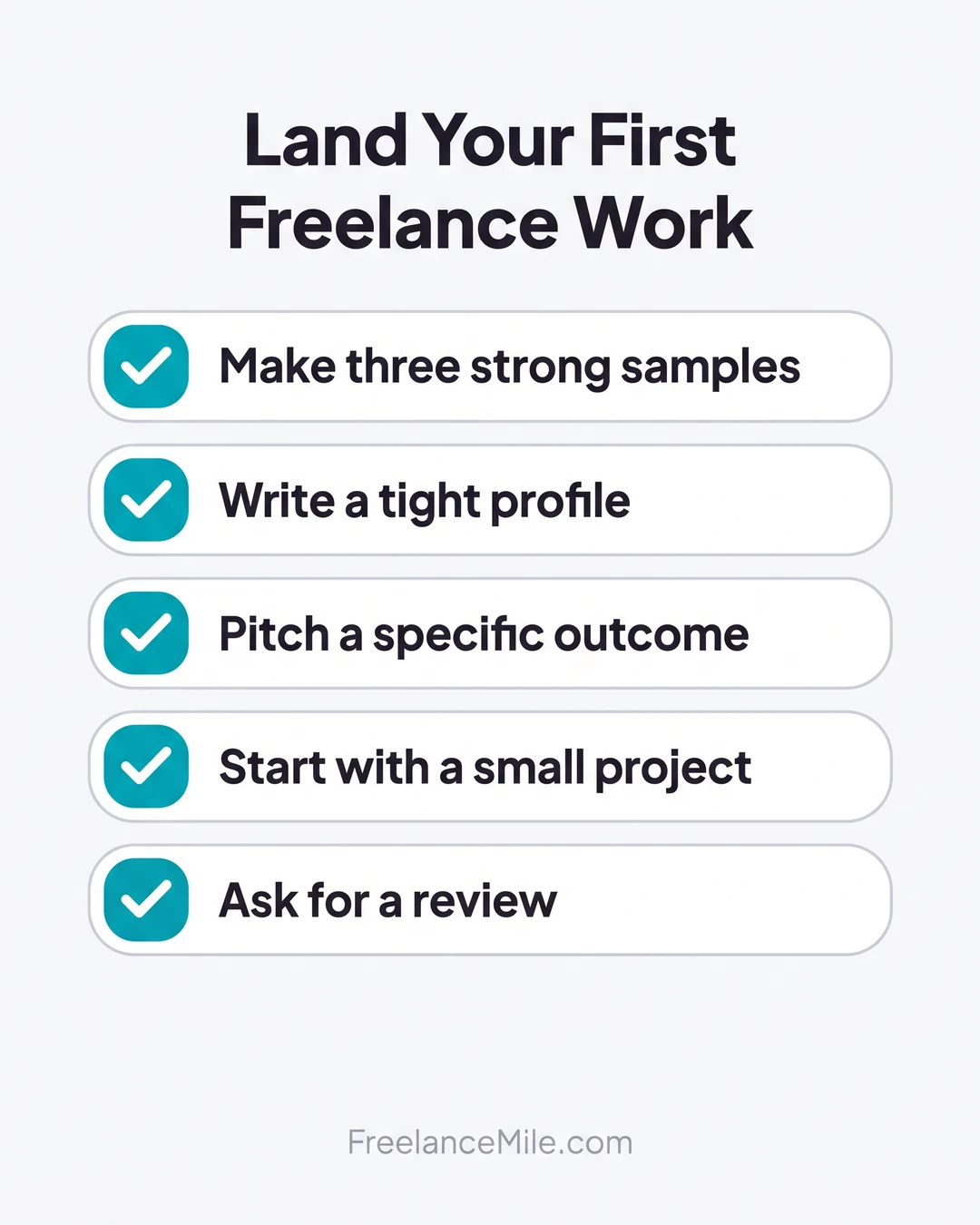
Make samples before you pitch
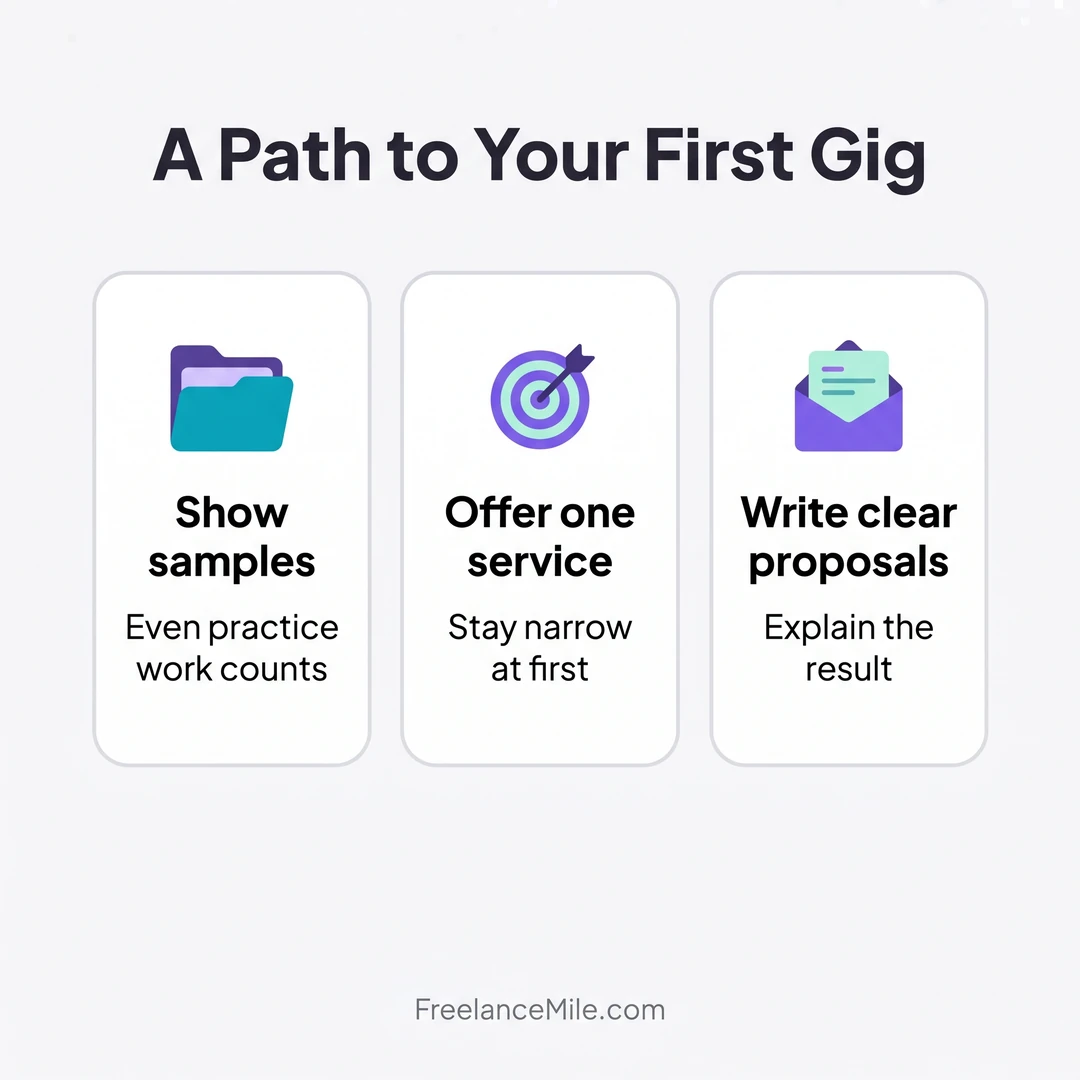
Create three pieces that look like paid work: a landing page, a set of social graphics, or articles in the niche you want. Label practice work honestly if it was not a client project.
Put the goal, your process and the result next to each sample. Clients should understand the outcome in a minute.
Write a tight profile and proposal
Say what you do, who it is for, and what you need from the client. Attach or link the closest sample. Keep the first proposal about their brief, not your life story.
Upwork and other platforms can be one source of leads if you meet the age and eligibility rules. You can also ask people you already know for a small paid task.
Start small and confirm the scope
A short, fixed project is safer than an open-ended retainer when you have no track record. Agree the deadline, revisions and payment in writing first.
A simple contract plus a clear invoice does more for a fresher than a flashy personal brand.
Taxes and paperwork for new freelancers
In the US, you are generally self-employed if you carry on a business as a sole proprietor, independent contractor or gig worker, including part-time work.
File an income tax return if net earnings from self-employment were $400 or more. Use Schedule C for profit or loss and Schedule SE for the 15.3% self-employment tax (IRS, IRS).
For 2026, the Social Security part of that tax applies to the first $184,500 of combined wages and net earnings. Set money aside from each payment so the bill is not a surprise.
How to become self-employed walks through the basic setup.
Challenges to plan for
Income will be uneven at the start. Do not spend a first payment as if it will arrive every month.
You will compete with experienced freelancers. A narrow offer, fast communication and reliable delivery are how a fresher gets a second project.
You also have to handle contracts, invoices and tax yourself. That is normal in freelance work, not a sign you are unready.
Frequently asked questions
Can I freelance with zero experience?
You can start with zero paid experience if you can show the skill. Practice samples, class projects or volunteer work are experience you can point to, as long as you describe them accurately.
Do I need a degree to get taken seriously?
Usually no. Most freelance work does not legally require a degree. Licensed professions are the exception.
How long until the first paying client?
There is no official average I can honestly quote. Some people get a small project in a couple of weeks; others take longer. The controllable part is samples, a clear offer and consistent outreach.