
To be more productive as a freelancer, plan your top tasks each day, block focused time, avoid multitasking, use one simple system to track work, and protect your sleep, movement and breaks.
Key takeaways
- Plan the day before it starts. Choose your top tasks and give each a time slot.
- Do one complex task at a time. The American Psychological Association (APA) says switching between tasks takes a toll on productivity.
- Keep your system simple. One task list and one calendar beat five half-used apps.
- Protect your health. The CDC recommends adults get 7 or more hours of sleep (ages 18 to 60) and at least 150 minutes of moderate activity a week.
- Close the day on purpose. A short end-of-day reset makes tomorrow easier to start.
Why productivity matters for freelancers
As a freelancer you are paid for results, not for hours at a desk. Time you lose to distractions or unclear plans is time you cannot bill or use to find new clients.
There is also no manager to set your pace. If you are new, start with our guide to what freelancing is and then build the habits below.
10 practical ways to be more productive as a freelancer
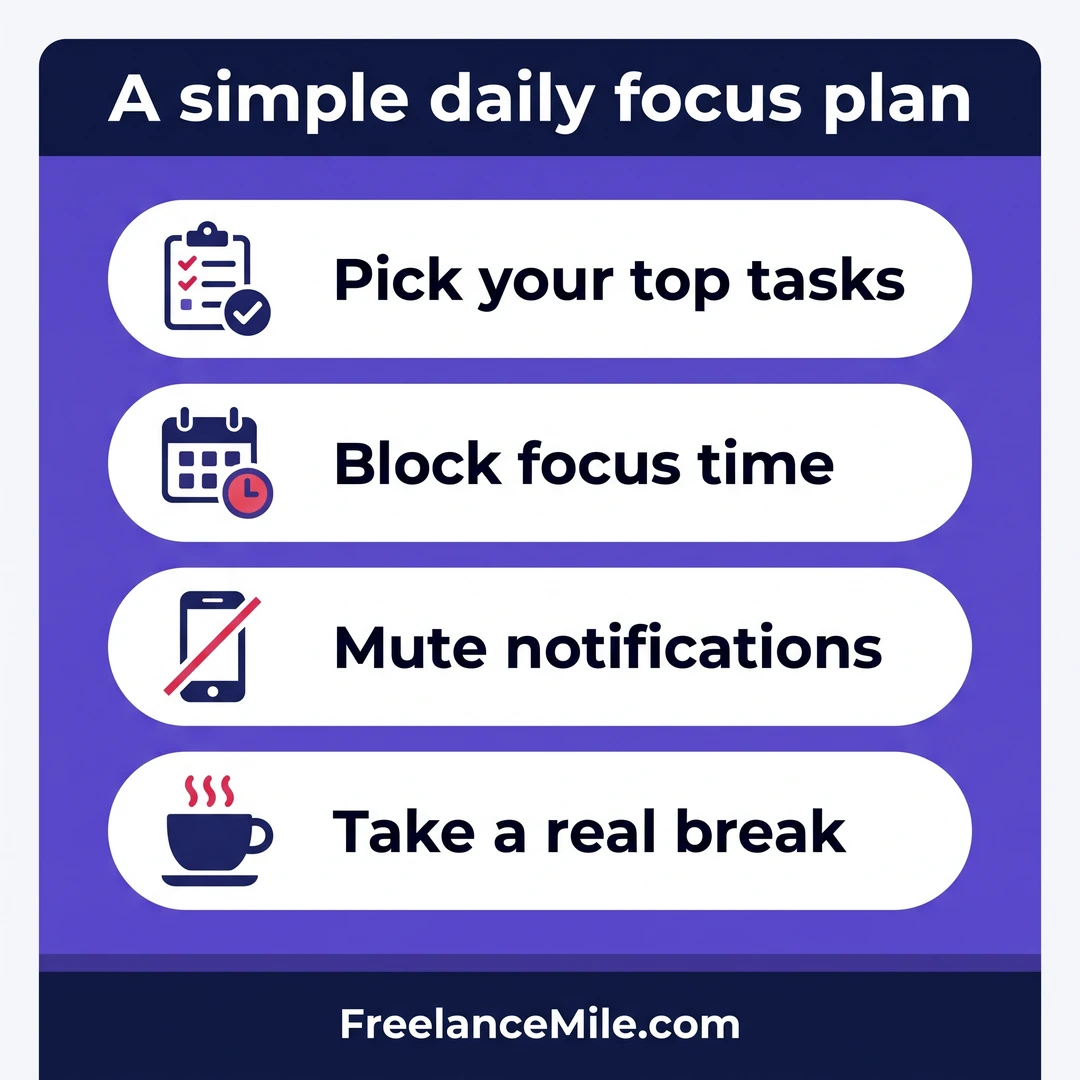
1. Pick your top three tasks the day before
Write down the three tasks that matter most tomorrow. Put client deadlines first, then work that brings in new clients.
2. Block focused time on your calendar
Time blocking means giving each task a set slot in your calendar. Put your hardest task in the part of the day when you think most clearly.
Treat the block like a client meeting, and move it only for a real reason.
3. Stop multitasking on complex work
The APA says doing more than one complex task at a time takes a toll on productivity. Its page notes that even brief mental blocks from shifting between tasks can cost as much as 40 percent of someone’s productive time (APA: Multitasking, switching costs).
Close extra tabs, finish one task, then move to the next.
4. Batch small tasks
Answer email, send invoices and update your project list in set windows, not all day. Fewer switches means fewer restarts.
5. Mute notifications during focus blocks
Turn off chat and social alerts while you work, and check messages between blocks. Tell clients your usual reply times so they know when to expect an answer.
6. Use one task system
Pick a single place for your tasks and deadlines. A board such as Trello or Asana, a notes tool such as Notion, or even a paper list works if you use it every day.
Pair it with a calendar such as Google Calendar for deadlines and time blocks. Pick tools by how you work, and check each tool’s current plans on its own site.
7. Break big projects into small steps
Split each project into steps that take a few hours or less. Give each step a due date that ends before the client’s deadline, so you have room for revisions.
8. Say no to work that does not fit
Take projects that match your skills and rates. Unclear scope or a low price often costs more time than it earns. See the freelance contract guide for what to agree upfront.
9. Sleep and move
The CDC says adults aged 18 to 60 need 7 or more hours of sleep a day, and that enough sleep can improve your attention and memory (CDC: About sleep).
The CDC also says adults need at least 150 minutes of moderate-intensity physical activity a week, and it can be split into smaller chunks (CDC: Adult activity). A short walk between blocks counts.
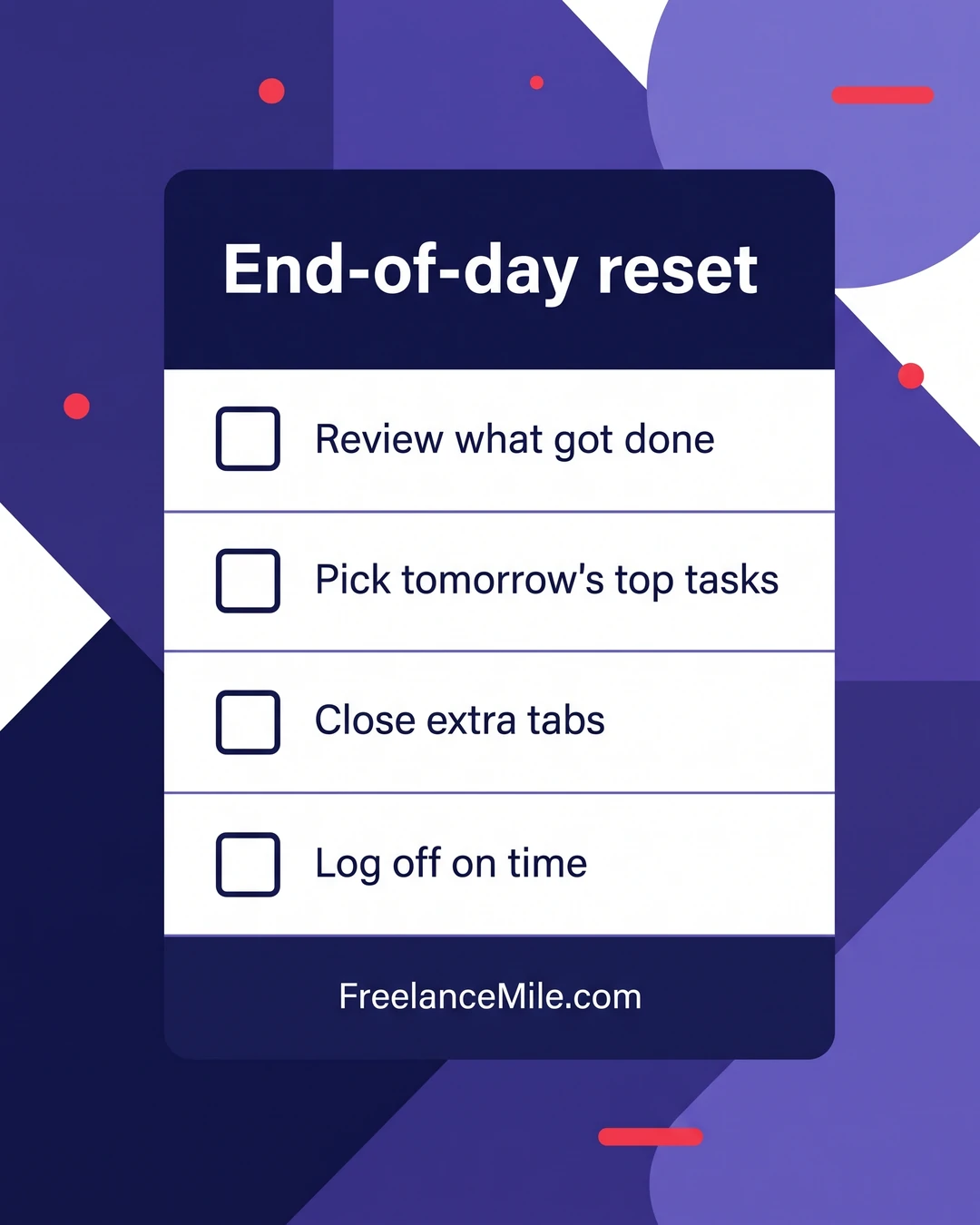
10. End each day with a reset
Spend five minutes to note what you finished, move what you did not, and pick tomorrow’s top three tasks. Then close your work apps and stop.
Common productivity mistakes to avoid
- Starting without a plan. You lose the first hour deciding what to do.
- Saying yes to everything. Too many open projects lead to late work.
- Skipping breaks. Short breaks and enough sleep help you keep your attention.
- Constantly changing tools. Moving your system every month costs more time than it saves.
- Working with no stop time. Without a finish time, work spreads into the whole day.
Build a simple weekly routine
Use one planning session a week, ideally at the start. Review deadlines, book your focus blocks, and leave open space for client messages and the unexpected.
Add time to look for new clients too. Our list of the best freelance websites is a good place to start, and the freelance hourly rate calculator helps you check that your price covers your time.
FAQ
How can freelancers be more productive?
Plan your top tasks, block focused time, avoid multitasking, keep one simple tracking system and protect your sleep and breaks.
What is the best way to manage time as a freelancer?
Many freelancers use a task list plus a calendar with time blocks. Choose the method you will actually keep using, and review it weekly.
Does working in work clothes help productivity?
We could not find a reliable source that proves it, so treat it as a personal choice. What matters more is a clear start and stop to your workday, and a dedicated workspace.
How many hours of sleep do freelancers need?
The CDC says adults aged 18 to 60 need 7 or more hours a day. It says needs change with age, so talk to a healthcare provider if you often have trouble sleeping.
Conclusion
Start with two or three habits: planning tomorrow’s top tasks, blocking focus time and ending the day with a reset. Add the rest once those feel natural.